Flashtract
Company: Flashtract
Role: Director of Product Experience Design
Case Study: Modernizing Billing and Document Workflows in Commercial Construction

Understanding the Landscape
Commercial construction billing is notoriously tangled. Every month, general contractors, subcontractors, and vendors wrestle with incomplete paperwork, unclear requirements, slow approvals, and long chains of accountability. To ground ourselves in the reality of this workflow, our team met directly with users across multiple tiers of the supply chain. We listened as they walked us through their routines, pain points, and workarounds, and paired those conversations with stakeholder interviews and a close read of market dynamics. The goal was simple: understand the truth of their day-to-day so we could build something that actually helps.
Clarifying the Core Problem
The themes were consistent. Billing and document collection were slow, opaque, and error-prone. Teams struggled to see where things were stuck, who owed what, and whether everyone was working from the right version of a document. The sheer amount of manual tracking created friction across the entire chain, leaving room for costly delays and miscommunication.
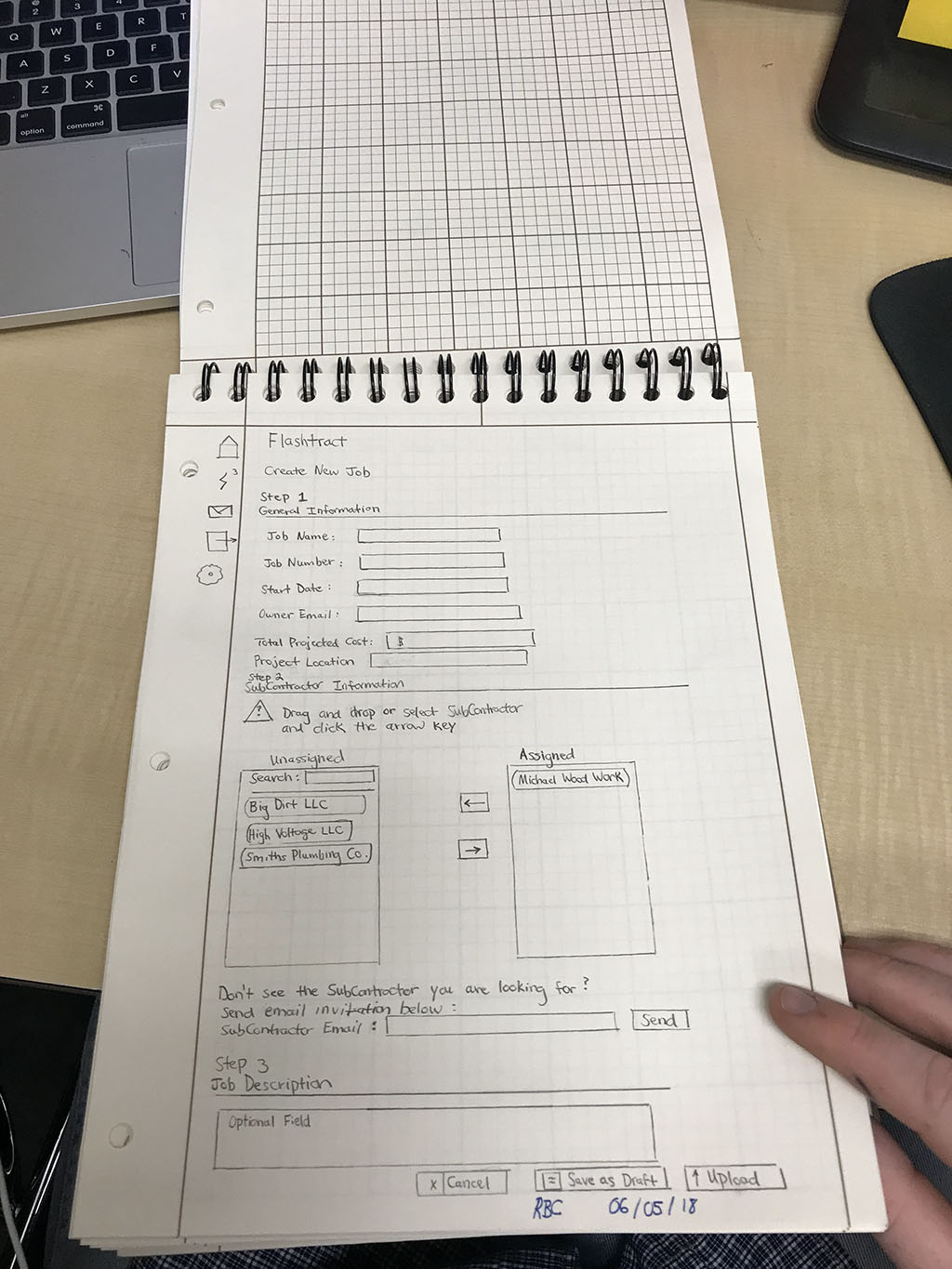
Designing a Better Way
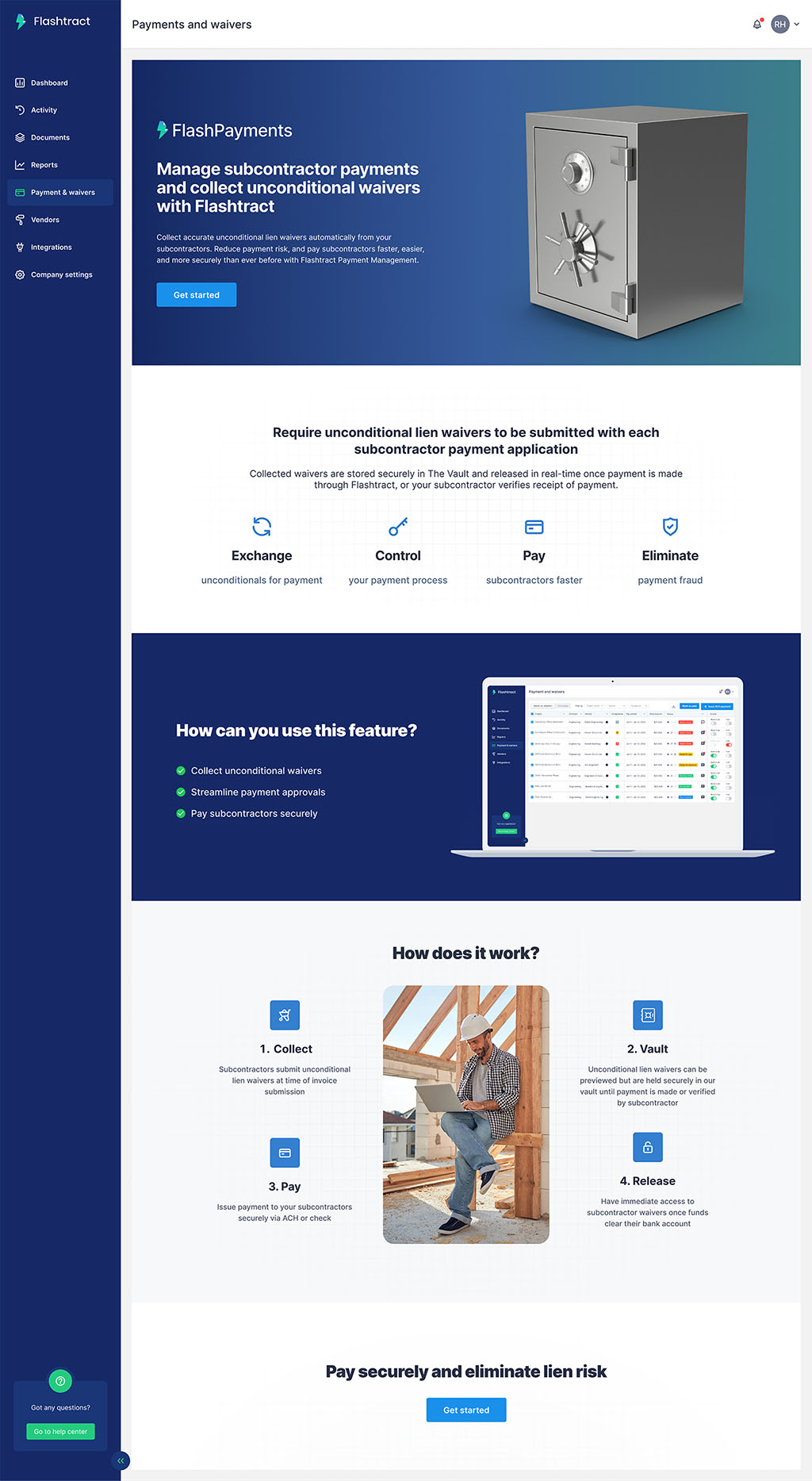
With those insights in hand, we set out to simplify the experience without oversimplifying the work. We rebuilt the billing and document workflows around clarity, transparency, and ease of use. This included streamlined onboarding, smarter guardrails for compliance, clearer communication paths, and a modern reporting layer that let teams quickly understand the status of each project. The design system supporting all of this was intentionally modular so we could scale and adapt quickly as the product grew.
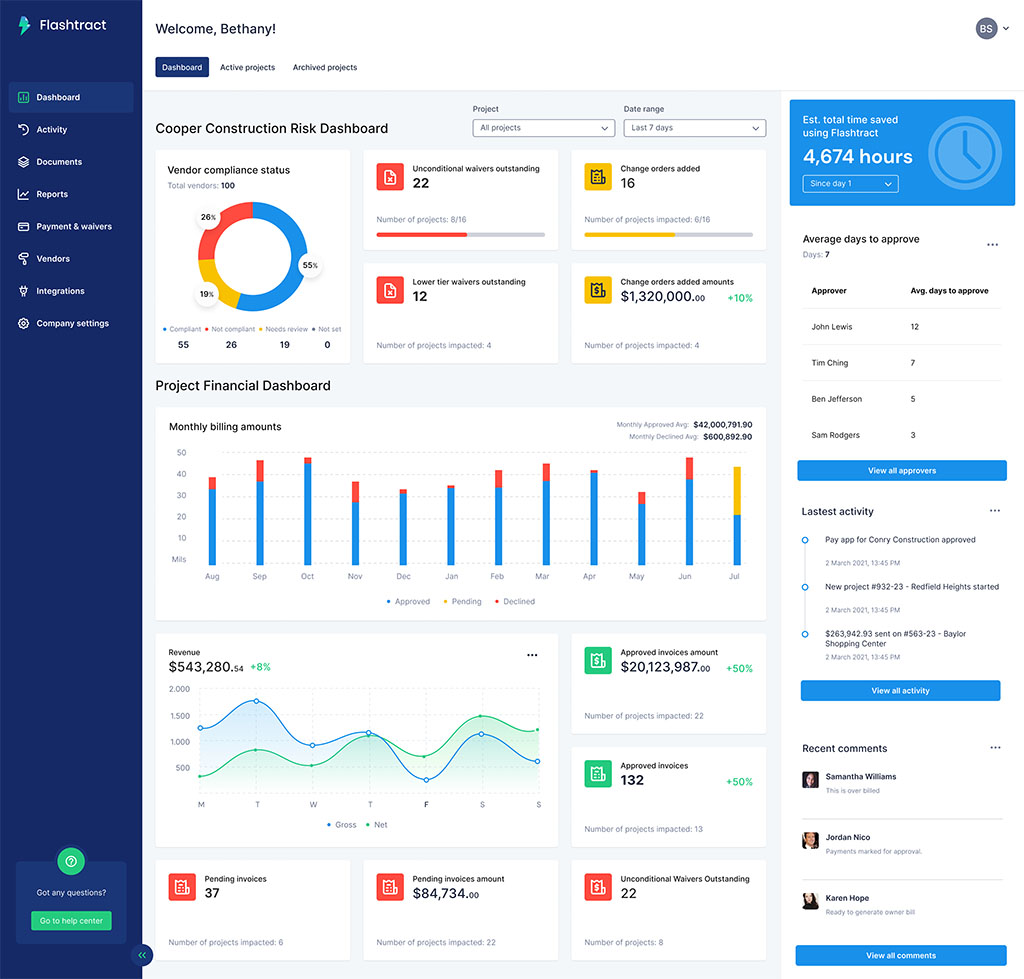
Building Through Iteration
Everything was shaped through constant feedback loops. We prototyped early and often, testing flows with real users to make sure our solutions mapped to reality. Parallel to this, we worked closely with the front end team to create a stronger handoff rhythm. Tools like Figma and Chromatic helped us build a design QA layer into the process so every component was reviewed before it ever hit the codebase.
What designers delivered and what engineers built stayed consistently in sync.
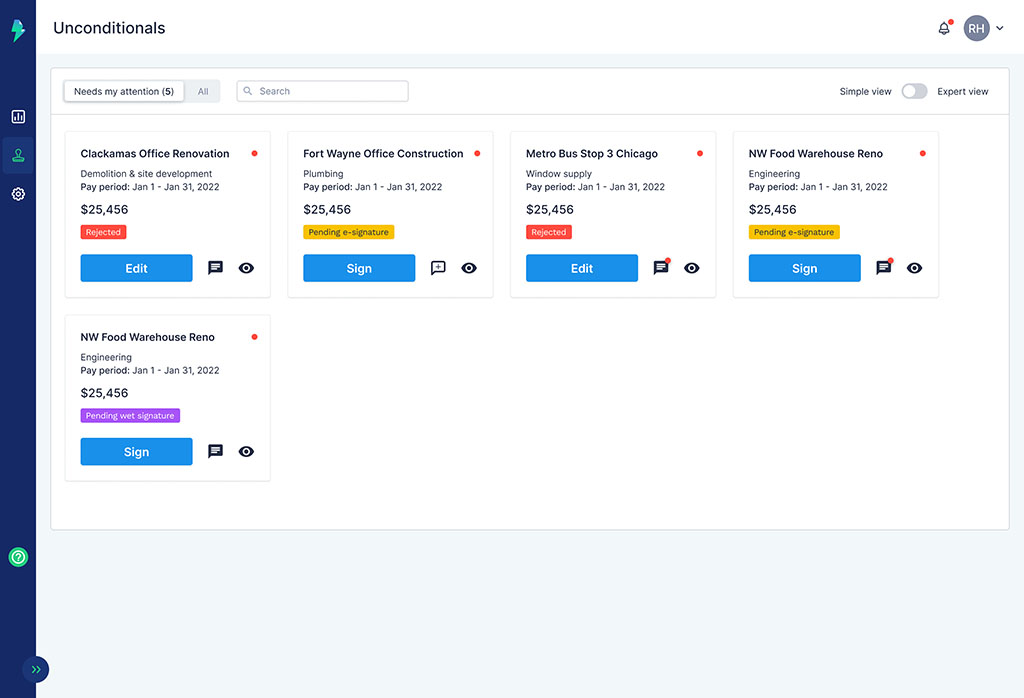
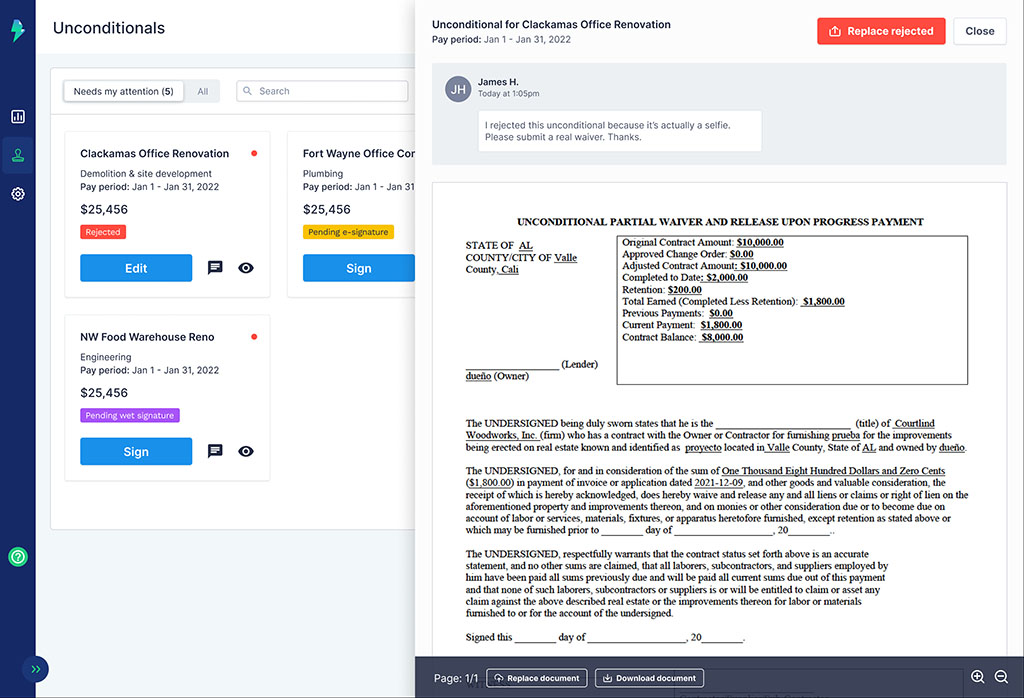
The Result
The final product replaced manual, disconnected workflows with a clear, unified system that gave contractors and vendors a shared source of truth. Billing cycles became faster and more predictable. Communication improved. Errors dropped. And because the platform was built on a strong, scalable design system, Flashtract was able to grow quickly without reinventing patterns at every turn.
My Role
As Director of Product Experience Design, I guided the vision, research, and execution of this work, partnering closely with product, engineering, and leadership. The mission was to bring clarity to one of the most complex corners of construction operations, and every decision, from workflow to component design, moved us closer to that goal.
More case studies this way.
RenoRun
Decathlon
Estateably
Bandsintown